THE TOYOTA CENTRE OF TECHNICAL EXCELLENCE

Designed to support and enhance the aftermarket experience of its customers through the dealer network, the Toyota Centre of Technical Excellence (TCOTE) based at the Toyota South Africa Motors Sandton Head office is quite simply the most advanced Toyota-owned facility of its kind on the African continent.

Fact –Toyota is synonymous with quality, durability and reliability

Fact – the latest brace of models from Toyota and Lexus are at the cutting edge of technology

Fact – to continue delivering the very best aftermarket experience to customers, SA’s favourite automotive brand has created the Toyota Centre of Technical Excellence (TCOTE)

Designed to support and enhance the aftermarket experience of its customers through the dealer network, the Toyota Centre of Technical Excellence (TCOTE) based at the Toyota South Africa Motors Sandton Head office is quite simply the most advanced Toyota-owned facility of its kind on the African continent.

In a “world first”, South Africa is the only country to establish designated Toyota Repair Support dealerships (14 in total), strategically placed throughout the country to reinforce the role played by Head-Office-based technical staff in providing assistance to other dealerships – as opposed to one national hub.

In line with Toyota’s continuous improvement philosophy – kaizen – this Technical and Repair Support Centre is a state-of-the-art facility, purpose-built to assist the aforementioned regional dealer network with the swift and efficient resolution of diagnostic challenges in particular, including remote diagnostics. (The latter is not exclusive to the 14 Toyota Repair Support dealerships; it is open to all 200+ dealerships within the Toyota and Lexus family.)

Repair support group technicians attend regular, bespoke training seminars, ensuring the universal maintenance of high diagnostic standards; the centre also conducts and supervises vehicle quality evaluations and research when required.

As articulated by Andrew Kirby, President and CEO of Toyota South Africa Motors (TSAM): “The reason this centre is such a pivotal part of our business is because automotive diagnostics are critical in our aftersales strategy.

“It benefits the entire production and sales cycle, from the original equipment manufacturer all the way to the service centre, resulting in reduced service time at dealer workshops, the timely resolution of vehicle issues and even the prevention of possible technical issues in the long term. Think of it as an early detection centre for vehicles that are new to our region to ensure that we are ready for whatever issues that may arise after a model been released to our market.”

The technology employed at TCOTE encompasses the many facets of vehicle maintenance and research. The core focus areas include:

1. Crash Data Recovery or CDR
2. Radial Force Variation
3. Remote Diagnosis including Pico-Scope Analysis
4. Injector Analysis
5. Dynomometer Measurement

1. Crash Data Recovery

TSAM makes use of the most sophisticated Crash Data Retrieval tools to obtain recorded data from a motor vehicle’s electronic components when a collision occurs.

Much like the so-called ‘Black Box’ data recorder on an aircraft, the Crash Data Retrieval or CDR tool, can provide valuable, unbiased information, when reconstructing exactly what happened, before an event.

The CDR is connected to the motor vehicle’s electronic system, from which it continuously records driver inputs and the performance of all electronic components, as well as other crucial data.

Factors such as accelerator and brake pedal inputs; vehicle and engine speeds; and crash impact data, can be extracted via the CDR to a computer for analysis after a collision. Stored files may be analysed later, depending on requirements or customer requests.

Not only is this data vital in assessing such elements as braking performance and air-bag deployment, but the information may also be used for the vehicle-owner’s convenience, and is admissible as evidence in a legal case.

2. Radial Force Variation

TCOTE makes use of the world’s fastest Radial Force Variation (RFV) Machine, a highly specialised form of dynamic wheel analyser. What makes a RFV different from a normal wheel balancer is the ability to simulate real road conditions courtesy of the roller and the employment of lasers to detect any tyre and wheel deformations, as well as wheel deflection and abnormalities.

3. Remote Diagnosis / Pico-Scope Analysis

The rapid advance of sophisticated technology in motor vehicle control systems, presents complex diagnostic challenges when a fault occurs.

An On-Board Diagnostic or OBD scan tool is essential equipment for modern vehicle maintenance but, while a “fault code” can indicate a specific area for further functional tests, it rarely isolates the specific root cause of a vehicle fault.

With an integrated video connection, users nationwide (from any one of the 200+ Toyota and Lexus dealerships) can now consult with TCOTE specialists in Sandton to quickly resolve complicated technical issues.

For example, TCOTE uses the latest four-channel Pico-Scope oscilloscope – the X-ray machine of diagnostics – which transforms a laptop or PC into a powerful diagnostic investigating tool.

By mapping the electrical activity in circuits, the oscilloscope allows users literally to view the changing signals inside wires.

Over 150 guided tests – ranging from simple ignition and injector tests, to more complex electronic circuitry testing – are integrated into the latest software, enabling the Pico Automotive Diagnostics Kits to measure and test virtually all electrical and electronic components and circuits in any modern vehicle.

4. Injector Analysis

Electronic fuel injector operation is critical to the smooth running of both petrol and diesel engines, affecting performance, fuel economy and emission outputs.

Even the slightest irregularity in the fuel-spray pattern can have a negative effect on engine components and/or performance, but with no specific cause identified.

Detailed investigation of injector performance includes the injector’s response to miniscule changes in engine revolutions, as well as examination of the injector’s fuel distribution and atomisation.

The Injector Diagnostic tool is capable of testing standard manifold port, top feed, and side feed injectors on petrol engines, as well as the complete common rail system on diesel engines. It enables technicians to simulate car spray patterns and flow rates, as well as conduct injector-inductance tests on electro-magnetic circuits. These advanced diagnostic tests cannot be performed in standard on-car testing procedures.

Due to their unique structure, these diagnostic machines can test all fuel-related components, while off the vehicle, by simulating pressure and fuel delivery, thereby shortening diagnostic time, as well as minimising repair costs.

5. Dynomometer Measurement

Derived from the Greek “dunamis”, the word “dynamo” means “power in motion”. A dynamometer measures this power.

Engines generate power and deliver it to the transmission/transaxle, whereby it transfers the power to the differential, which powers the drive-shafts, which in turn are coupled to the wheels.

When being transferred across these mechanical devices, power is absorbed in the process, delivering substantially less power to where it matters most: the wheels. All motor manufacturers specify engine power on the engine flywheel.

A chassis dynamometer simultaneously measures power or “rotational force” and speed of rotation at the wheels. From this input data, it calculates engine power at the actual point of power delivery, as opposed to power at the engine flywheel.

This power difference sometimes causes confusion amongst tuners and even some dynamometer manufacturers. Power-loss across systems can vary substantially between vehicles, depending on multiple factors, such as transmission type, front/rear wheel drive, width and size of tyres, or temperature. A dynamometer is therefore useful, both for measuring actual power delivery to the wheels, as well as for diagnostics when the vehicle is stationary in the workshop, where engine data logging can be done, away from public roads and traffic.

FERNANDO ALONSO IN POLAND WITH TOYOTA GAZOO RACING

Fernando Alonso completed a successful two-day training in the Toyota Hilux on September 2-3 in Szczecin, Poland covering 700 kilometres, including sections used by the recently-concluded Baja Poland. The training course featured a variety of sand tracks, hard and soft soil, and bumpy terrain developed by rally raid specialists and the team’s logistics partner, Overdrive Racing.

Fernando Alonso completed a successful two-day training in the Toyota Hilux on September 2-3 in Szczecin, Poland covering 700 kilometres, including sections used by the recently-concluded Baja Poland. The training course featured a variety of sand tracks, hard and soft soil, and bumpy terrain developed by rally raid specialists and the team’s logistics partner, Overdrive Racing.

Fernando will head to South Africa for a non-competitive outing in the Lichtenburg 400, fifth round of the South African Cross Country Series, on September 13-14. Originally scheduled to take place near Harrismith, the event moved to its new location due to unseasonably dry conditions which posed a fire risk.

Glyn Hall, Team Principal: “This was the first test for Fernando in Europe with the Hilux driving on very different terrains and conditions compared to Namibia two weeks ago. As we progress through our intensive training programme, we are focussed on getting quality kilometres as Fernando continues to familiarise himself with the Hilux and rally raid, more so than pure mileage. Nevertheless, we were able to double the planned mileage for this test which demonstrates just how quickly Fernando is acclimatising to the Hilux. Next week, we leave the relative comfort of a private test setting, to give Fernando a first taste of a rally raid competition environment at the Lichtenburg 400. We are grateful to the South African Cross Country Series for the special dispensation allowing TOYOTA GAZOO Racing to maximise this valuable opportunity in Fernando’s continuing training programme.”

Fernando Alonso: “It was definitely a positive couple of days here in Poland where I could experiment with a different sort of terrain. At this stage of my training, I welcome every kilometre in the Hilux and I’m happy we were able to push ourselves beyond the team’s original plans. It’s really great to be part of the TOYOTA GAZOO Racing family and be given opportunities to try my hands at different types of motorsport. The Hilux has been really fun to drive and I’m enjoying every test.”

TOYOTA STAKES A 40.4% CLAIM OF THE LCV MARKET IN AUGUST

Retailing 3 565 units, Hilux took overall honours in August as Toyota South Africa Motor’s (TSAM) best-selling vehicle, boosting the stable’s total sales tally to 10 156 units. This accounts for a 22.3% market share out of the 45 537 total units sold in South Africa in August.

Hilux 3 565

Hi-Ace Ses’fikile 1 578

Land Cruiser Pick-up 235

Retailing 3 565 units, Hilux took overall honours in August as Toyota South Africa Motor’s (TSAM) best-selling vehicle, boosting the stable’s total sales tally to 10 156 units. This accounts for a 22.3% market share out of the 45 537 total units sold in South Africa in August.

According to the National Association of Automobile Manufacturers of South Africa (Naamsa), the August sales reflected a decline of 2 440 units or 5.1% compared to 47 977 vehicles sold in the same month last year. However, Naamsa was pleased to announce that export sales had registered further strong gains last month in line with industry expectations.

Senior Vice President of Sales and Marketing at TSAM, Calvyn Hamman says: “It’s clear that the market has remained depressed longer than we expected and that there is very little for consumers to be optimistic about. However, we see a silver lining in the sales of light commercial vehicles (LCVs) which have increased by 0.5% compared to August last year.”

The growth is more tangible for Toyota whose LCV sales have grown by 1 242 units or 3.8% compared to the same month in 2018. The locally-produced Hilux and locally-assembled Hi-Ace have sold more than half the total sales of TSAM last month, recording 3 655 and 1 578 respectively. One of the notable performers in the LCV segment is the Land Cruiser pick-up with 235 sales.

In the passenger segment, popular SUVs Fortuner and RAV4 sold 811 and 586 apiece, while the evergreen Corolla Quest (579) and Etios (673) both had a laudable showing. On the truck front, the Hino 300 Series recorded 18% share of the MCV segment while the Hino 500 Series ended the month with 16% share of the HCV segment.

“Once again, we’re grateful to the entire Toyota team and dealers across the country for their continued efforts towards making Toyota a market leader. We remain committed to creating customer smiles and to continue making Toyota, Lexus and Hino brands of choice for our market,” says Hamman.

EXCELLENT RESULTS FOR TOYOTA GAZOO RACING SA

Toyota Gazoo Racing SA’s Michael van Rooyen had an excellent outing in East London, where he recorded two second place-finishes in Round 6 of the 2019 Global Touring Car championship.

The Toyota Corolla driver started the weekend as the second-fastest car in qualifying, and maintained that position throughout the weekend, to bring home more points than any other GTC driver over the weekend. This moves Van Rooyen up into third place in the overall standings, just 11 points off the lead.

“Yes, it was a fantastic weekend for us,” said the Rustenburg Rocket after the event. “We were quick in qualifying and missed out on pole by just 0.1sec.”

Starting from second place for Race 1 put Van Rooyen on the outside of the track – a daunting position considering the high-speed Potter’s Pass, which is Turn 1 at the East London Grand Prix circuit. Even so, the Rustenburger found some space to slot into, right behind pole sitter, Keagan Masters (Volkswagen).

“Having Keagan so close to the front of my Toyota Corolla caused a bit of understeer into Potter’s, but I managed to catch up on the rest of the circuit,” said Van Rooyen. “We had a great ding-dong battle, but in the end, Keagan took the victory, while I settled for second place.”

Race 2 saw a reversed grid, based on the results of Race 1. This saw Van Rooyen start in sixth place – a position he quickly set about improving.

“Luckily for me, Simon (Moss – Audi) made a mistake early on, and this let me through into fifth place. Then I caught up with one car after the other and used my Push-to-Pass opportunities to get up into second place.”

Only Tschops Sipuka (Audi) remained ahead of the flying Toyota Corolla driver, but “he drove really well, defending with conviction. I had no option but to settle for another second place.”

The two podium finishes saw Van Rooyen bring home a mass of points, while championship leader, Simon Moss, failed to score anything of consequence. As a result, the Audi driver ceded his position at the top of the standings to Volkswagen driver Keagan Masters; while Van Rooyen leapfrogged into third place in the standings.

“It was a great weekend for us,” said Van Rooyen. “Slightly frustrating to lose out on wins in both races, but we’re now just 11 points off the top of the table – while we were more than 20 points adrift before the weekend. So, we really can’t complain.”

Two race events remain in the 2019 season, with the first taking place in Cape Town next month. “We have four more chances to score points, and if anything, this weekend proved that a lot can change in a single weekend – so we have to remain focussed and push for maximum points towards the end of the season. Who knows what could still happen?”

ADAPTING TO URBAN NEEDS

Oke Hauser, Creative Lead MINI LIVING, talks about the concept of the Urban Nest.

How did the cooperation between MINI LIVING and Penda in Shanghai come about?

Let’s take a look at one of the most pressing challenges we are facing today, in our highly densified urban environment. It becomes obvious that on the one hand it’s the sheer scarcity of space and on the other hand how we use the space we have available.

We all know the results, rising rents, cramped living conditions, long commutes. Especially in such an attractive city like Shanghai. With MINI LIVING we want to contribute solutions that trigger inspiration on how we could live better and more joyful inside of cities in the future. There is still so much potential to be explored in the urban fabric – we just need to find new and creative ways of how to activate it.

MINI LIVING is all about collaboration. We believe that great things evolve when ideas are shared and conventions are challenged. That is why the MINI LIVING team partnered up with PENDA Architects who are known for their experimental and forward looking perspective on architecture and the improvement of urban life.

What was your vision/your idea behind the concept of the Urban Nest?

For Urban Matters 2017 MINI LIVING rethinks the static and fixed conditions of architecture – Can a house be thought as a flexible and transformative structure? Something in a constant change that can be easily configured and reconfigured due to changing urban spatial conditions and needs of its inhabitants? How can we turn buildings into active contributors for the improvement of urban life? These are the questions MINI LIVING answers with the Urban Nest installation for Urban Matters Shanghai in collaboration with Penda Architects.

The Urban Nest is designed as a spatial framework offering a flexible future of urban living based on a small personal footprint and a collaborative lifestyle. Imagine a building that can easily adapt its geometry to any urban void and turn it into an inhabitable place – that is where the design idea for the Urban Nest was born.


In your eyes, what are the most prominent characteristics of Shanghai?

Shanghai is a fascinating place, bursting full of life and creativity. A city where the east and the west connect and the past meets the future every day. It is a place where inspiration happens on a daily basis – it embodies the essence of urbanity.

Based on a 3 x 3m module the Urban Nest is easy to assemble and reassemble to offer endless possibilities for spatial configuration. Every module can be combined with each other or extended according to the individual requirements of the inhabitants. The modules integrate spaces to live, work and play for an inspiring collaborative life. MINI LIVING Urban Nest becomes more than just a residential building – given its open and flexible character it invites the public in and becomes an urban micro neighborhood that beats at the heart of the city. Inspired by the rich history of effective use of space in Shanghai dense traditional neighborhoods MINI LIVING Urban Nest connects the past with the future by the creative use of space.

What are the biggest urban challenges Shanghai is facing?

Given its attractive character Shanghai has experienced a vast growth and densification process over the last years that comes with numerous challenges: rising rents and long commutes as an example. We believe it is the perfect place to contribute new alternatives how to live in the future to improve the quality of urban life.

The installation is quite elaborate. Tell us more about the individual parts

The MINI LIVING Urban Nest installation is all about creating a house as good as it gets. Collaborative living is the heart and soul of MINI LIVING therefore the center of the installation is a shared housing solution based on a small personal footprint consisting of private spaces and shared amenities like the kitchen. At MINI LIVING we believe that if you share you get more. More space, more amenities and more inspirational moments. Spaces like the workshop become temporary extensions of the private apartments, allowing a flexible lifestyle for the inhabitants. Inviting the public in by integrating functions like the library and the small cafeteria the house becomes much more than just a residential building – it turns into an incubator of urban life.

The integration of nature plays a prominent part in the Urban Nest. How come?

Cities are a product of a complex cultural development and have always been seen as the counterpart of the understanding of nature and its wilderness. We believe it’s time to change that and rather think integrative about architecture and nature to improve the quality of inner city life. The integration of nature as an example allows architecture to change from its passive condition into an active contributor to the urban microclimate.

In what way is the Urban Nest specifically designed for Shanghai? Is it applicable to other cities?

Shanghai is a very dense city but we believe there is always an untapped potential in the urban fabric. The modular character of the Urban Nest concept embodies the idea of constant change easily adaptable to any urban geometry.

Who are the people you created your designs for?

MINI has always been centered around the idea of a human design – an approach that puts people and their interaction with each other first. We want to create places for people that share this mindset and embrace human exchange as an origin of inspiration for a better urban future.

INTRODUCING THE GLOBAL VILLAGE

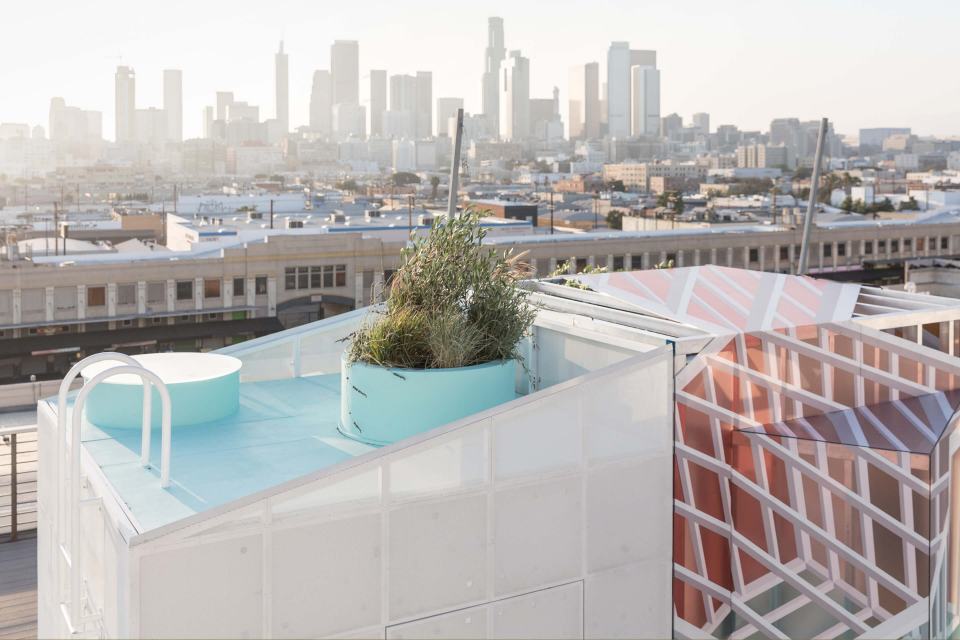
In response to the many ways in which the quality of urban life is decreasing, MINI explores new perspectives of city living through its four MINI LIVING Urban Cabins. These living concepts stop in metropolises around the globe and provide a temporary home to its inhabitants. On a mere 15 square metre footprint, it offers flexible solutions that bring MINI’s design credo of “creative use of space” to life, all while examining our new, global cultural identity.

The declining quality of life in our cities is caused by rising rents, ever-expanding urban populations, increased density and the isolation of metropolises’ inhabitants. Meanwhile, the world is more connected than ever. Styles and tastes now transcend borders – most noticeably in architecture – and as a result, our cities look more and more alike, leading to the erosion of local, cultural identities.

With the MINI LIVING Urban Cabins, MINI is traversing previously unexplored perspectives of urban living. On only a 15 m2 footprint, they create space for a global identity on a local level. Each cabin is located in a different city and enables its inhabitants to feel at home wherever they are. With the first fully operable co-living hub opening in April 2019 in Shanghai, the idea of this global village will be taken to the next level.

The four different Urban Cabins will be placed in four cities and delve into four locally relevant topics. From exploring the decreasing number of libraries in London with a microlibrary, to Beijing where visitors can enjoy a meditative break from the bustling city streets. Each cabin is equipped with an experience room that is solely related to the specific topic. The room is developed by a local architect who knows his/her city’s needs and desires best and is able to create a meaningful experience here. Each Urban Cabin reverberates with the spirit of the city it represents, and the cabins’ focus theme will be reflected in one of the elements in MINI LIVING Shanghai as well.

Beyond the respective themes that the Urban Cabins explore, the materials used in their construction will also give them distinct personalities. Where the core material of timber provides warmth and a sense of home to the interior, additional secondary materials are sourced locally. These materials give texture, colour and a style that only LA, Beijing, New York or London could create.

Although on a tiny footprint, each cabin maximises the space it can provide to create a comfortable living space for two people. These flexible miniature houses can be reconfigured with a rotation, a fold, a slide or with the pull of a wall, to suit the people who live in it. As a result, the character and feel of the spaces change, shifting from day to night and according to the changing needs of its inhabitants. During the day, the Urban Cabins open up to the city, inviting communication and fostering community. At night on the other hand, they can be closed, creating flexible, comfortable and beautifully designed homes.


On the one hand, each temporary and inhabitable Urban Cabin is a concise approach to a new way of urban living, but on the other hand it is a creative ambassador for open-minded global togetherness – a commitment to collaboration, communication, exchange and dialogue. In line with MINI LIVING Shanghai, the cabins demonstrate how we can create architecture for our shared global identity that adapts to our way of living.

FIELD NOTES FOR THE URBAN TRAVELLER.

Unveiling the new capsule collection representing field notes from travel.

When we travel, we embrace the unknown, leave preconceptions behind and transcend borders. Immersing in entirely new contexts and cultures with unfaltering curiosity, we learn and grow. At the end of every great journey, new discoveries about the world around us as well as different versions of ourselves, come to light. The latest MINI FASHION initiative to challenge and expand expectations of travel will launch in 2018 under the collection title FIELD NOTES. In partnership with The Woolmark Company, MINI will explore journeys on a mental and emotional level as opposed to a purely physical one. Through the capsule collection that will be unveiled at Pitti Uomo 94, MINI seeks to reimagine travel by seeing it as a state of mind, a gateway to pushing boundaries and allowing the outside world to influence what happens within. Four exciting designers will communicate their personal travel experiences through contemporary fashion pieces made of wool, in celebration of their transformative journey.

“Transcending borders”, a central theme in MINI FASHION’s activities, means more than crossing physical territories. It requires inner, unfamiliar, heightened and sensory experiences that come together in the art of the journey. MINI believes that travelling is more than moving from A to B. It is a journey from one feeling to another, one culture to another, one perspective to another. The designers’ experiences and inspirations, gathered during their journeys, will serve as the starting point of the creative process. MINI will recreate their personal stories and represent the process of transforming them into fashion FOR THE URBAN TRAVELLER. As such, the MINI FASHION FIELD NOTES Capsule Collection is a truly collaborative project.

The designers, most of whom are Woolmark prize alumni, combine creativity and innovation with unpretentiousness in their work. Liam Hodges (UK), Staffonly (China), PH5 (USA), and Rike Feurstein (Germany) will each represent a global city with their daring approaches to creativity, colour and style. Their distinct talents unite with MINI and Woolmark’s common focus on design, quality and innovation, and share their courage in challenging conventions. Following the launch at Pitti Uomo, the collection will go on a world tour organised by MINI and The Woolmark Company, where it will inspire new perspectives through a series of local events.


Product Scoop at Toyota SA’s State of the Motor Industry

Product Scoop at Toyota SA’s State of the Motor Industry

The second State of the Motor Industry (SOMI) event hosted by Toyota South Africa Motors served as the perfect platform to provide a sneak preview of the carmaker’s 2019 product campaign.

Cool Corolla [Hatch]

This sleek new C-segment hatch replaces the outgoing Auris, and features an eye-catching angular head – and tail lamp treatment, a wide stance and modern, high-quality interior. The Corolla hatch eschews the previously employed 1.3 and 1.6 litre engines in favour of the technologically advanced 1.2-litre turbocharged mill (as utilised in the C-HR crossover). Smooth mid-range torque, quiet operation and excellent fuel efficiency form part of the engine’s characteristics. Customers have the option of a 6-speed manual transmission or Continuously Variable Transmission (CVT) with 10 pre-programmed shift steps.

The Corolla Hatch is underpinned by Toyota’s TNGA platform – which promises to deliver an engaging drive along with excellent ride comfort. Three derivatives are on offer – XS Manual, XS CVT and the flagship XR CVT. All models offer a generous specification level including LED headlamps and DRL’s, smart entry, sport seats, dual-zone climate control and Vehicle Stability Control (with hill-assist function).

Ravishing RAV4

Definitely the talk-of-the-town, Toyota’s medium SUV offering has become a familiar sight on South African roads. The all-new RAV4 adopts a striking look – inspired by the American ‘truck’ design language – and boldly announces its arrival on the ultra-competitive SUV market. A prominent trapezoidal honey-comb front grille and upswept LED headlamps form the front façade.

Shown in range-topping VX-grade, the RAV4 features a raft of convenience and safety specifications – including Toyota Safety Sense; a nucleus of active safety systems including Adaptive Cruise Control and Pre-Collision System. Two all-new petrol engines (available in 2.0 and 2.5 litre-guise) will power the range, driving either front or all-four wheels. Full model line-up and detail will be released in March when the newcomer hits showroom floors.

Heroic Hilux GR Sport

The next product iteration in the Gazoo Racing line-up is the Hilux GR Sport. The GR Sport builds on the rock-solid foundation that the Hilux Double-cab has established for itself, and amplifies its already impressive street and off-road credentials. The limited edition Hilux GR Sport features bespoke Gazoo Racing-themed decals, a unique front grille design, two-tone colour scheme and GR Sport-specific 17-inch alloy wheels.

The main party trick however is the special off-road biased suspension – affording the Hilux GR-S even greater off-the-beaten-track prowess. It will be based on the 2.8 GD-6 4×4 6AT derivative and also includes tailored interior treatment. The Hilux GR-S will reach showrooms mid-year.

Pioneering Prius

Toyota’s Hybrid pioneer has gone under the proverbial knife, and emerged sharpened and refreshed. The 4th generation Prius debuted in 2016 with an unashamedly flamboyant exterior design and futuristic interior layout. For 2019 the hybrid-hero inherits rounder, more engaging lines with revised front and rear-end treatments, headlamps, tail-lights, wheel design and colour choices.

Inside, the cabin’s sensory quality is even more refined with new upholstery, along with revisions to the centre console and some of the controls on the instrument panel. The proven 1.8-litre petrol-electric hybrid powerplant continues unchanged and boasts an impressive thermal efficiency of over 40 per cent and a combined fuel index of 3.7 litres per 100 kilometre.
•Lexus

Unquestionable UX

Lexus’ latest model is the eye-catching UX Crossover which reached showrooms earlier this month. Infused with dynamic attitude, the Lexus UX is engineered to deliver quick and engaging driving with a Lexus-smooth demeanor, making it a unique entry in the luxury compact crossover segment. A unique-to-UX spindle grille, curved front headlamps and a low-slung sporty profile create a distinct visual identity for the luxury crossover.

Inside, the materials and workmanship are pure Lexus, combining Japanese traditions in craftsmanship and hospitality with innovative production techniques. The Lexus UX offers a wide choice of interior colour combinations, each of which conveys a specific mood and accentuates the premium design. The UX is available in three different configurations; UX 200 EX, UX 200 F Sport (powered by a 126 kW 2.0-litre mill) and the Hybrid UX 250h.

Ravishing RC 350 F Sport

The fresh new RC 350 F Sport retains all the virtues of what RC is renowned for, and builds upon this, adopting the latest evolution of Lexus’ signature design language and sharpened driving dynamics inspired by the brand’s flagship luxury coupe, the LC. The exterior styling remains as sporty as the preceding model, but subtle changes in the details, inspired by Lexus LC design cues, imbue it with a new-found elegance.

Inside the cabin, everything from the high-quality materials to the precise layout of controls and gauges has been crafted to maximise driving pleasure. New headlamps and taillights, visually- arresting 19” alloy wheels – complete with orange F Sport brake calipers – and revised bumper ducting create a striking appearance. The silky smooth 232 kW 3.5-litre V6 engine paired with an 8-speed Direct Shift automatic transmission provides propulsion.

Racy RC F

Exciting news is the addition of the F model to the RC coupe range. F is the performance arm of Lexus and was introduced on the IS F model in 2012. So what does ‘F’ mean? Well the answer is rather simple; the elegant RC Coupe receives an injection of some serious muscle in the form of a high-revving 5.0-litre V8 engine and suitably adapted 8-speed sports transmission. The thundering V8 engine serves up 351 kW of Power at 7100 rpm and a hefty 530 Nm.

The standard features list is naturally very comprehensive and includes a 17-speaker Mark Levinson sound system, power-adjustable semi-aniline sports seats, seat heating and cooling, smart entry, lane-keeping system and advanced multi-information display.

Tantalising RC F ‘Track’

Taking the already adrenaline-infused RC F coupe and then fortifying it with proverbial automotive steroids, results in the RC F Track. The Track model amplifies all the inherent dynamic qualities of the RC F with a bespoke enthusiast-focused package. This package includes Carbon fibre body elements, a fixed carbon-fibre rear wing, lightweight aluminium racing wheels and titanium exhaust – which not only sheds 80kg of dry weight but also aids aerodynamic performance to boot.

LS F Sport

Continuing in the theme of F Sport models, Lexus’ luxury flagship saloon is also set to receive the F Sport treatment. The exterior incorporates exclusive F Sport design features and distinctive F Sport 20-inch alloy wheels. The interior receives unique F Sport front seats and instrument cluster with special interior trim options (including a bi-tone grey and black option) – allowing customers to further differentiate their vehicle. A suede headliner and aluminium door trim additionally elevate the interior space.

The exceptional twin-turbocharged 3.5-litre V6 engine delivering 310kW and 600Nm continues to

TALKING ABOUT A RAVOLUTION

• All-new 5th generation RAV4 built on TNGA platform
• Expressive, angular exterior design
• Improved AWD functionality with Torque Vectoring
• New Dynamic Force engines
• New three-grade line-up
• Toyota Safety Sense added to RAV4 line-up

With the original RAV4 unveiled in 1994, Toyota singlehandedly created the SUV crossover category; and it’s that same pioneering spirit in the all-new fifth generation RAV4 that sees this iconic SUV enter a new era of striking design, performance, capability and safety.

BOLDER

The new RAV4 takes a bold leap forward with a dynamic new design characterised by a front grille with an assertive, angular bumper, and LED headlights, as well as taillights. The results is a vehicle that has a confident, athletic stance on the road, adding a more chiselled and practical take to the progressive design language first introduced on the Toyota CH-R.

This strong polygonal theme runs throughout the interior too with an ergonomic, high-quality cabin characterised by soft-touch surfaces, including the dashboard and door panels. The switchgear is new, with cleanly integrated buttons and pleasingly tactile controls like the soft-touch knurling on the audio and air conditioning controls.

Brushed-aluminium trim adds a premium feel and highlights the interior’s stylish design, while a low-set instrument panel with horizontal lines that flow into the door panel emphasise the cabin’s generous width and give the driver a clearer view of the road ahead.

MORE COMFORTABLE

Underpinning the new RAV4 is the TNGA (Toyota New Global Architecture) platform. It’s the first time its been used for an SUV and, in the RAV4, it contributes to supple and engaging ride, as well as a spacious interior with class-leading load space.

The TNGA platform’s inherently lower centre of gravity and high body rigidity means its engineers didn’t have to compensate with a overly stiff suspension to give it decent dynamic abilities. Instead, the independent front and double wishbone rear suspension is pliant enough to soak up bumps, while still remaining agile and responsive to provide the driver with impressive dynamic control.

The new platform also means Toyota’s designers could create a vehicle that is slightly shorter than its predecessor (by 5mm), yet has a longer wheelbase (by 30mm) – and that means more interior space. It’s wider too (by 10mm), allowing for a larger, open centre console between the front seats – something more typical of larger SUVS – along with wider seats for rear passengers and increased opening-angle of the rear doors.

Along with plenty of useful and easily accessible storage for the driver and front passenger, the load space behind the rear seats is notably bigger thanks to a fully flat floor that’s 60mm longer than the previous generation’s. It now boasts a best-in-class capacity of 580 litres (a 79 litre improvement) that, when the 60:40 split rear seats are folded down, can accommodate a 29-inch mountain bike without any wheels having to be removed. There are more storage nets on each side of the boot, clever details that include a hand grip on the tailgate that serve as a hanger, and a power-operated tailgate with hands-free function.

MORE CAPABLE

The all-new RAV4 backs up its rugged, determined looks with increased ground clearance and shorter front and rear overhangs, allowing it to take on tough terrain with ease. Along with a choice of two “Dynamic Force” naturally aspirated four-cylinder petrol engines – a 127kW 2.0-litre and 152kW 2.5-litre – comes improvements in the all-wheel drive (AWD) technology. Now, not only do you get more responsive and fuel-efficient engines, but the new RAV4 delivers enhanced performance capabilities and control in all driving conditions.

The mechanical all-wheel-drive system is equipped with Toyota’s first dynamic torque vectoring system with Rear Driveline Disconnect. This manages torque distribution between the left and right rear wheels, providing stable performance and accurate response to steering inputs when cornering, both in dry and slippery conditions.

Toyota’s AWD Integrated Management systems – a unique feature in its class – further improves the RAV4’s AWD performance by automatically adjusting different the vehicle systems (steering assist, brake and throttle control, shift pattern and drive torque distribution) according to the drive mode selected. “Mud & Sand” and “Rock & Dirt” are the modes are available.

With regard to transmissions, the RAV4 comes with a choice of three: a 6-speed manual; a Continuously Variable Transmission (CVT); or an 8-speed automatic. The 2.0-litre engine is paired with either the rev-matching 6-speed Intelligent Manual Transmission (iMT) or Shiftmatic CVT option, and comes in 2WD or AWD guise.

The 2.5-litre is exclusively combined with an 8-speed Sport Direct Shift transmission that offers smooth and crisp shifts and lock-up control when in Sport mode.

AND SAFER

Befitting Toyota’s occupant safety ethos, the new RAV4 is equipped with a raft of safety features. A full suite of airbags – including knee and curtain – are fitted to all models, with electronic driver aids in the form of ABS, EBD, Brake Assist, Vehicle Stability Control (VSC), Hill Assist Control (HAC) and Trailer Sway Control all catered for.

The VX model introduces Toyota Safety Sense for the first time on RAV4, which includes Adaptive Cruise Control (ACC), Lane Departure Alert (LDA) with Steering Control, Blind-Spot Monitor (BSM) and Pre-Crash System (PCS). With steering assist, as well as radar-controlled braking in conjunction with acceleration functions, these Adaptive Cruise Control and LDA systems essentially end a level of autonomous driving to the VX models.

MODEL LINE-UP

For the first time the RAV4 line-up will comprise a three-grade strategy – GX, GX-R and VX.

The GX: 17-inch alloy wheels, roof rails, LED headlights, push-button start, a seven-inch display audio and multi-information display (MID), Cruise Control, Reverse Camera and rear Park Distance Control (PDC) are also included.

The GX-R grade: aimed at customers looking for a more rugged exterior appearance and increased off-road usage, the GX has a bigger upper front grille with broad horizontal slats, a larger more prominent skidplate, chunky black over-fenders, and 18-inch alloy wheels. In terms of spec, it adds power-adjustable leather seats with lumbar support, seat heaters, leather steering wheel and trim, smart entry, auto-dimming interior mirror, rain-sensing wipers, wireless charging and climate control.

The VX grade: adds 19-inch high-gloss alloy wheels, Auto High Beam (AHB), Blind Spot Monitor with Rear Cross Traffic Alert, memory seats, power-operated tailgate, Panoramic View Monitor plus front PDC. The instrument cluster gets a TFT multi-information display (MID), providing key driver information, including a large LCD speedometer.

KEY TAKE-OUTS

RANGE & PRICING
• RAV4 2.0 GX MT 2WD – R 416 400
• RAV4 2.0 GX CVT 2WD – R 427 600
• RAV4 2.0 GX-R CVT AWD – R508 100
• RAV4 2.0 VX CVT 2WD – R505 400
• RAV4 2.5 VX 8AT AWD – R577 900

All models carry a 6-services/90 000 km service plan with 12-month/15 000 km intervals. A 3-year/100 000 km Warranty is also included.

POWERTRAINS
2.0-litre Dynamic Force
Power: 127 kW @ 6 600 rpm
Torque: 203 Nm between 4 400 – 4 800 rpm
Fuel consumption: between 6.5 – 6.8 l/100km
C02 emissions: 147 g/km.

2.5-litre Dynamic Force
Power: 152 kW @ 6 600 rpm
Torque: 243 Nm between 4 000 – 5 000 rpm
Fuel consumption: 7.3 l/100km
C02 emissions: 166 g/km.

EXTERIOR COLOURS
GX & VX: nine colour choices including the Urban Khaki, Cinnabar Red and Caribbean Blue hues.
GX-R: five complimentary colours

Interior colours
VX: choice of Black and Ivory leather interior
GX: Black fabric interior trim
GX-R: choice of Black and Orchid Brown Art-leather

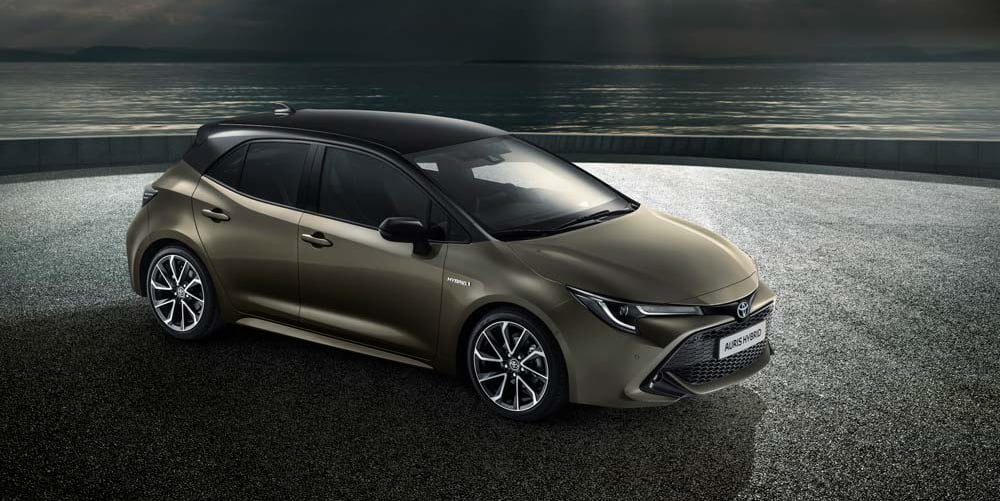
The third-generation Toyota Auris

The third-generation Toyota Auris was revealed to the world at the Geneva motor show with some electrifying enhancements.

While a 1.2-litre turbo petrol engine will be available, an exciting 1.8-litre hybrid electric powertrain which will offer up 50 percent all-electric driving in everyday commuting will also be available, while a high-output 2.0-litre full hybrid model is on offer in some markets.

The new Auris is built on the TNGA (Toyota New Global Architecture) platform which provides a more rewarding driving experience thanks to a low centre of gravity, multi-link rear suspension, and a more rigid body shell.  Better handling and stability are present with the use of TNGA while comfort is not compromised.

The Auris features a much more bold, dynamic and sleek design. This was achieved by lowering the ride height, increasing the length by 40mm, the width by 30mm and decreasing the height by 25mm. On top of this, new LED lighting for the front and rear and the addition of a small front-lip spoiler and a rear roof spoiler result in a much more striking and sporty design.

We can expect the new Auris to arrive in South Africa during the second half of 2018, with model line-up and specs becoming available closer to the launch.

Close

What are you looking for?

Choose from one of our four categories below.

Next

What is your budget?

Select a minimum and maximum amount to set your budget range.

View by:

next

What is the type of car?

Select which car type you are looking for below

next

What type of transmission?

Select which type of transmission you would prefer below.

next

New or pre-owned car?

Choose from the options below.

next

What brand of car?

Select a brand from the drop-down options below.

next

Select a year car model & mileage.

Choose what year model and mileage you are looking for.

Maximum Mileage:

Year Model:

next

Add any extra preferences.

Feel free to select from the additional preference options below if desired.

Drive Type:

Fuel Type:

Colour:

Find my car
Close

Book A Service

Complete the form below to schedule your service today.

"*" indicates required fields

Vehicle Details*

DD slash MM slash YYYY
Close

Book A Panel & Paint Repair

"*" indicates required fields

DD slash MM slash YYYY
Close

Sell My Car

"*" indicates required fields

Close
Close

MINI Service Special

Complete the form below to schedule your service today.

"*" indicates required fields

Close

MINI Motorplan Special

"*" indicates required fields

Vehicle Details*

DD slash MM slash YYYY
Close

BMW Service Special

Complete the form below to schedule your service today.

"*" indicates required fields

Vehicle Details*

DD slash MM slash YYYY
Close

BMW Motorplan Special

"*" indicates required fields

Vehicle Details*

DD slash MM slash YYYY
Close

Search our site

Close
Close

Coming Soon!

Exciting things are on the horizon! Our Lifestyle Shop is almost here, bringing you a curated collection of unique and stylish products designed to elevate your everyday living.

Close